It is estimated that there are more trees in the eastern United States than when the first Europeans arrived in the 15th Century. It is an encouraging story about mankind’s ability to restore what was harvested with reckless abandon during centuries of economic growth. But today’s forests, from the Atlantic Coast to the Mississippi River Valley, are not the same forests those early settlers found.
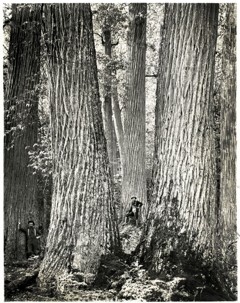
Today’s eastern forests are spectacular in the fall, with the wild red, orange, and yellow leaves of the dominant oak and maple trees, along with hickory, beech, poplar and walnut. But the original American colonists lived in forests dominated by chestnut trees, often said to be so numerous that one could walk atop the forest canopy from the Carolinas to New York without ever touching any other species. Probably an exaggeration, but even in 1900 – after three centuries of harvesting – there were an estimated four billion American Chestnuts. That was before the blight killed them. Almost all of them.
Last month the U.S. Department of Agriculture’s Animal and Plant Health Inspection Service (APHIS) officially deregulated an American chestnut species called Darling 54, named for the benefactor who helped fund years of research leading to a new hybrid thought to be more resistant to the blight. Even before the decision was announced, though, there was already dissent among other groups working to re-establish the lost chestnut trees.
This is not the end of the race for Darling 54 researchers, who must also get permits from the EPA before being able to release and sell the new chestnut trees. But it was a significant milestone on a very long and difficult journey. Chestnuts were highly valued, by Native Americans and early European colonists alike, the nuts being abundant, rich in calories, and high in Vitamin C and antioxidants. The wood was rot-resistant and straight-grained, making it ideal for posts, fences, log cabins, and furniture. Early American chestnut furniture is highly prized today, and many of the millions of telegraph and phone poles made from chestnut throughout the 19th century are still in use.
In the late 1800s a deadly blight fungus was introduced into the U.S. from east Asia. The pathogen, Cryphonectria parasitica, had wiped out virtually the entire American chestnut population by 1950. Interestingly, the pathogen cannot compete with microorganisms in the soil, and therefore cannot kill the trees’ roots. So, millions of stumps continue to sprout every year throughout the historic range, and although the new sprouts inevitably succumb to the blight, their persistence has kept hope alive for generations of dedicated plant pathologists, forest geneticists, molecular biologists, botanists, and silviculturists.
The effort to restore this iconic tree has been underway at least since the 1980s when the American Chestnut Foundation (TACF) was formed. One of its early chairmen, a philanthropist named Herb Darling, later helped fund research at the State University of New York’s College of Environmental Science and Forestry (ESF), which developed the new “Darling 54” now in question. That’s because there are several ways to think about restoring a species that is virtually always vulnerable to the blight. And organizations dedicated to varying methods are bound to disagree among themselves.
One way to go about it is to cross the American chestnut with the Chinese chestnut, a blight-resistant species that has largely replaced the American chestnut in commercial use in the U.S. Since 1989, TACF has pursued this strategy, seeking to develop a blight-resistant tree that retains the characteristics of the original American chestnut. A second approach, pursued by ESF, uses genetic engineering to insert a wheat gene that produces an enzyme capable of breaking down an acid produced by the blight fungus, potentially improving the tree’s resistance. APHIS has now determined that Darling 54 poses no more risk than any other chestnut tree, hence the deregulation.
TACF, a nonprofit foundation, helped launch and nurture the ESF program in New York. But when its leaders learned that ESF was discussing the commercial sale of Darling 54 trees with a startup company, they were horrified and withdrew their longstanding support. The disagreement now seems almost like a sibling rivalry among researchers, each convinced that their approach is most likely to succeed. And if either method ultimately does, both sides will be eager to claim credit.
I hope every attempt to re-establish the American chestnut succeeds. And I hope everyone involved remembers one of the great lessons of political history: when something goes right, there is generally enough credit to go around.


{ 0 comments… add one now }