Last week the Washington Post ran a lengthy article about the Palisade peach business, especially how this year’s Colorado River water problems may effect one of the West’s most unique industries. Several friends in DC called me about it, surprised that the Post would notice Palisade peaches, much less analyze the future of Colorado’s orchards.
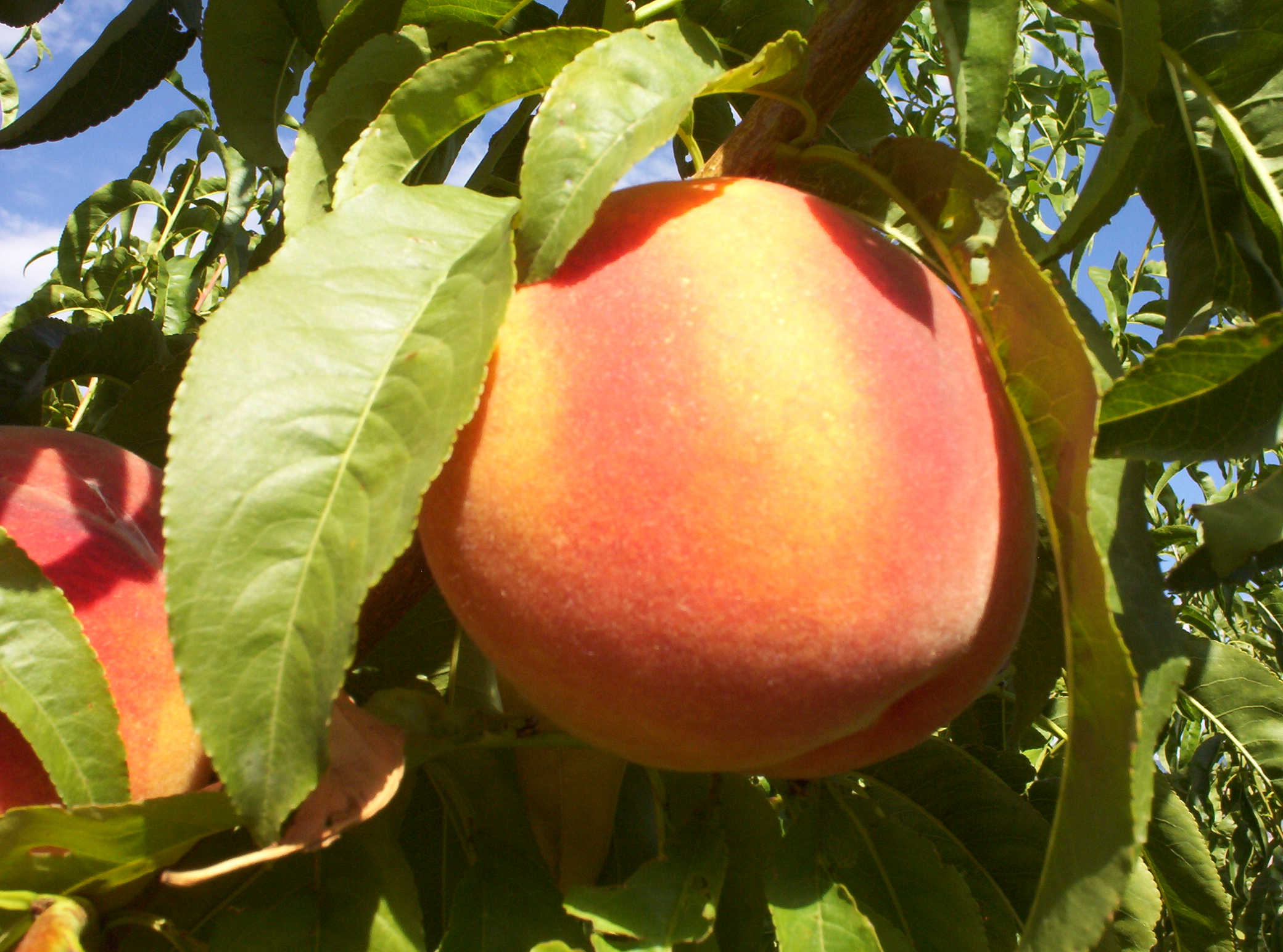
The article left much unsaid, as reporters from mainstream Eastern newsrooms have their own predictable narratives. So, if you expected such a feature story to highlight the charm of an outdated industry, sympathetic to its anachronistic participants who may not survive the era of climate change, you would not be disappointed.
The reporter is a global warming media veteran, according to her published bio, having evolved from reporting on “Earth sciences and the universe” at the Post to being a “climate and science reporter.” She has personally seen Greenland, a Peruvian glacier, and islands in the Indian Ocean, and won several awards. Her writing is excellent and she knows how to weave a compelling yarn. But beyond the expected political spin, this article missed the nuances of the current water dilemma by the proverbial country mile.
There is a certain inherent laziness to such reports, perhaps understandable in reporters from elsewhere with no background in the assigned issue. This reporter spoke at length with Dennis Clark, one of Palisade’s best growers whose deep roots in the valley give him rare insights and in-depth expertise. All she apparently thought worthy of reporting was that he worries about the water shortage. I wasn’t there, but am confident that is but a fraction of the education he tried to give her. She then spoke with the state’s largest fruitgrower, Bruce Talbott, just long enough to get a single quote to use in a photo caption, and to Eric Hergert, who runs the Roller Dam and explained the complexity of the Grand Valley’s water systems. She met a nice lady who told her how tasty fresh peaches are, and a river outfitter who laments that there is more water for irrigation than for rafting, never mind the concept of senior water rights.
Then it was on to Boulder for the obligatory interview with one of the environmental industry’s favorite professors, who told her Colorado’s historic (she calls it byzantine) water law – without
which there would be no orchards or towns in the Grand Valley – was an accident. “As a society, we never really made a decision about how the water should be shared among these various competing interests,” he told her. “We just said, ‘First come, first served.’” Someone should
inform him that was a decision – a carefully considered one that resulted from decades of work and was written into the state constitution. Instead of any respect for the law that he supposedly teaches, he just thinks “Severe cuts will be needed, and… that would have to mean sharp reductions in the amount of water used for farming.” Good thing he isn’t in charge.
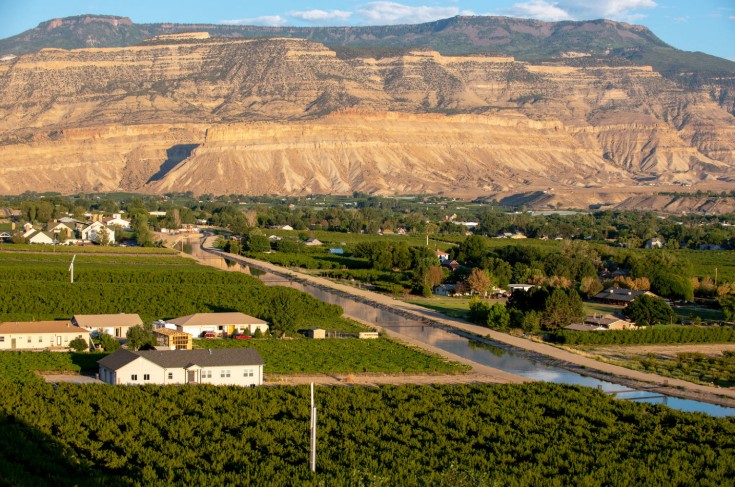
The Post even threw in the modern woke view of history, saying the Grand Valley’s early white explorers thought the area was a wasteland fit only for sagebrush. Early settlers, including Clarks and Talbotts, did not come to inhabit a wasteland – they were visionaries who foresaw the lush green valley we now take for granted. They knew a paradise when they saw it. She writes about the government violently expelling the Valley’s native Utes in 1881, though of course the Utes never permanently inhabited the Grand Valley and there was no violence there. Anyway, it is completely off the subject of today’s water shortage, just a gratuitous slam at people whose right to live in Palisade she finds morally questionable.
She scarcely touches on the real story of the year, starting with the announcement that the Orchard Mesa Canals would be shut off in mid-September, then restarted in early October before the final seasonal closure. The Valley’s five irrigation districts, including those with the most senior water rights, all voluntarily used less than their full allotment to prolong the irrigation season and save the orchards and other farms. They literally traded weeks for running their canals, so no growers were entirely shut down.
That was a handshake agreement that government agencies and political officials could never pull off. Ironically, the Post mentioned the stalemate between the seven Colorado River states, saying “the federal government’s latest efforts are insufficient…” But it completely missed the opportunity to highlight one of the most community-spirited and successful achievements in the recent history of Colorado water. And it came from neighbors, not governments.


{ 0 comments… add one now }