At this month’s Western Conservative Summit in Denver, I watched an extraordinarily moving interview Wil Armstrong filmed with former Senator Ben Sasse, while the latter is undergoing treatments for advanced stage four pancreatic cancer. Sasse’s clarity and vision are rare among political figures, especially on the relative unimportance, and destructive power, of “idolatry in politics.”
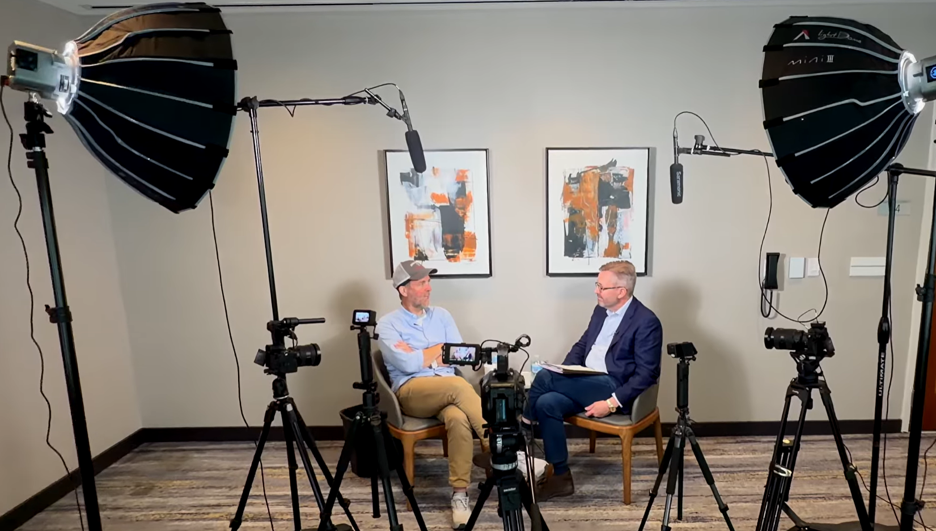
Even while acknowledging his impending departure from this life, Sasse courageously runs an astonishingly popular podcast and has published several books. My favorite is “Them: Why We Hate Each Other and How to Heal.” He cites declines in life expectancy and birth rates, and documents that communities are collapsing. Little Leagues are disappearing. Service clubs are dwindling. Most people don’t know their neighbors. No institutions command widespread public trust – not the government, the press, universities, environmental groups, not even scientists. Nearly half of Americans think the other political party isn’t just wrong; it’s evil. That isn’t about politics – it’s about loneliness.
It is a compelling follow-up, almost a sequel, to Robert Putnam’s 2000 best-seller, “Bowling Alone.” Putnam assembled evidence from a wide range of activities, showing that Americans are becoming less connected to one another through voluntary associations, civic life, neighborhoods, religion, and work. The title example is that Americans are still bowling, but bowling alone rather than joining organized leagues. The activity survives while its social institution declines.
The phenomenon is evident in organizations everywhere, with membership and participation declining not just in bowling leagues, but PTAs, service clubs, fraternal orders, veterans’ organizations, labor unions, trade associations, and local clubs. Even in groups with sustained membership, Americans are increasingly less likely to attend meetings, serve on committees, or take leadership roles. The same is true in civic affairs, with declines in public meeting attendance, volunteering on campaigns, and serving on boards and committees. A large majority of voters prefer to remain unaffiliated rather than join either party. People are not less interested in public affairs – they’re less interested in the face-to-face, local activities where citizens used to become friends and work together.
Putnam saw churches as vital sources of social capital because they brought people together weekly, with opportunities to form friendships, serve others, and participate in common activities. But church membership and attendance have cratered.
Even informal socializing has plummeted – simple things like visiting friends, entertaining in our homes, having dinner with others, getting together with neighbors. Organized recreation has taken a huge hit, not just bowling and Little League, but also scouting and summer camps. Boy Scout membership went from 4.8 million in 1972 to barely 1 million today. Kids still camp, hike, fish, and enjoy the outdoors, but mostly not through any organization with weekly meetings, adult volunteers, assigned projects, and long-term relationships.
We have previously documented declines in environmental organization membership, which skyrocketed through the 1960s to 1980s. Many groups, including the Sierra Club, Environmental Defense Fund, Audubon Society, Natural Resources Defense Council, and Defenders of Wildlife have lost members, laid off employees, or cut budgets more recently. I think Americans care more about the environment than ever, but it’s easier to sign a petition or attend a one-day protest than to join groups with local chapters, committees, officers, and ongoing projects.
Americans used to be joiners. Veterans were in the American Legion and VFW. Businesses were in the chamber of commerce, community leaders in Rotary and Kiwanis, and kids in Little League and Cub Scouts. Our grandparents were Elks or Odd Fellows; their parents were Masons. Their wives ran the PTA and did most of the campaign work. A century ago, everyone belonged to a church; most people don’t belong to anything anymore.
Where Ben Sasse updates Putnam is demonstrating where this disconnectedness has left us. Putnam showed a detachment from civic and social institutions that once created community and social capital. Sasse shows how that erosion has produced profound loneliness and alienation, which helps explain Americans’ anger, polarization, and political dysfunction. The political consequences are loneliness, alienation, anger, and a search for identity.
Many companies have discovered they no longer need all their employees in the office. Individuals have discovered they can support environmental causes without joining an environmental group; hike without joining a hiking club; volunteer without joining a civic organization; and communicate with friends without having to see them.
Technology uproots us from local things. Sasse says recovering our rootedness will heal our lonely souls. “America needs you to love your neighbor and connect with your community. Fixing what’s wrong with the country depends on it.”


Comments on this entry are closed.