In 1970 when President Nixon presented to Congress “Reorganization Plan No.3,” no one foresaw the eventual result – some of history’s greatest environmental successes, and a virtual stranglehold on economic progress. America’s air and water are far cleaner today, automobiles emit virtually nothing, and many formerly polluted lands have been cleaned up. But the cumbersome procedures required for federal permitting have also led to delays, higher costs, and often killed projects and jobs permanently. Those impacts were never part of the plan.
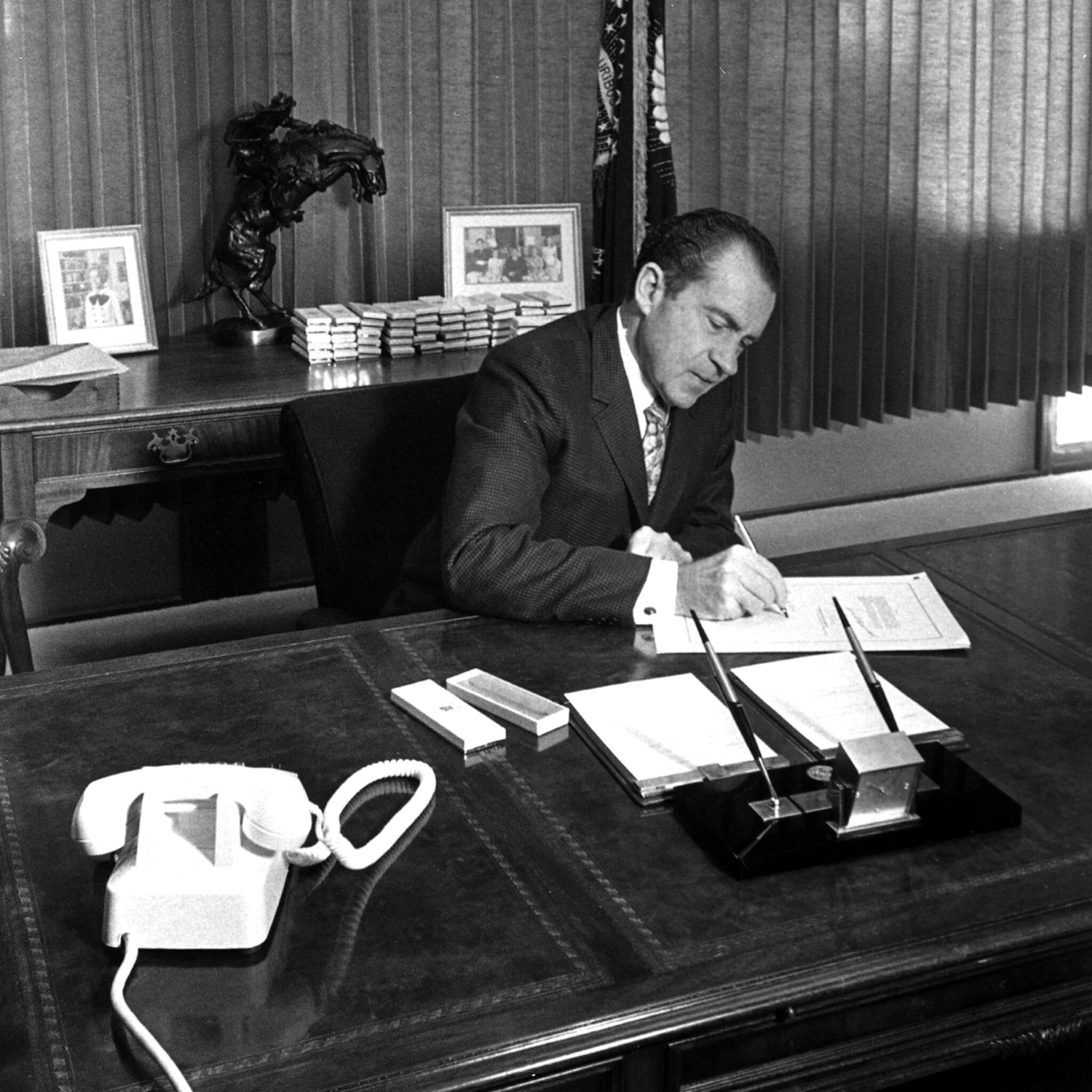
EPA was created by executive order, bringing under one roof dozens of programs from multiple departments. Simultaneously, Congress passed a procedural law called the National Environmental Policy Act (NEPA). For the first time, it required federal agencies to examine the environmental consequences of their decisions, and to take measures to prevent environmental damage. NEPA also specified procedures for that purpose, including publishing alternatives and seeking public comment before finalizing decisions. Since its passage in 1970, that “NEPA process” has been applied to virtually all major projects, at the federal, state, or local level, if they involved any federal funding, contracts, or permits.
NEPA also established the White House Council on Environmental Quality (CEQ) to advise the president on environmental policy and the state of the environment. In 1978 President Carter changed that, ordering CEQ to publish regulations governing how all agencies should comply with NEPA. But federal courts have now ruled that CEQ never had regulatory power, which only Congress could give it.
It is a pivotal issue because the NEPA process dictated by CEQ has become one of the greatest hindrances to economic progress. Agencies spend years analyzing, publishing, reviewing, and defending their work in court. They must decide between “categorical exclusions,” “environment assessments,” “environmental impact statements,” “findings of no significant impact,” or some other approach, and they get sued virtually every time. They hold public hearings, get thousands of public comments to which they must respond, and publish multiple documents throughout that process.
A federal study concluded that the NEPA process takes an average of 4.5 years, and many projects are delayed much longer (14 years for I-70 improvements in Denver, and over 20 for the I-70 mountain corridor). That is all about process, not environmental protection. And it is all based on detailed requirements CEQ had no power to impose. That is the conclusion of three separate federal courts, including the DC Circuit Court of Appeals, the nation’s second highest court. Invalidating CEQ rules left each department to set NEPA procedures that fit their specific duties, as Congress originally intended.
The Interior Department has now published its own NEPA rules, including the difference between environmental assessments and environmental impact statements, and deadlines for completion of either. The environmental industry, long accustomed to using NEPA as its weapon of choice for delaying and killing infrastructure projects, is hopping mad.
One environmental writer shrieked that “Interior Just Gutted a Bedrock Conservation Law That Will Affect Public Lands Everywhere.” It was one of the poorest researched and least informed articles on the subject, though not unusual. In fact, it was not Interior that gutted the previous NEPA rules, it was the federal courts. She accuses Interior of loosening “oversight on logging, mining, oil and gas development, and other industrial projects.” Which is completely false. The new Interior procedures merely create a more predictable permitting process and limit the time it takes to review projects, which has nothing to do with oversight.
She claims “conservationists and sportsmen” are upset, but lazily quoted only one person. He’s an activist who once worked for a couple environmental groups, but now runs his own “network,” which according to public filings has no funding and no members. In other words, he’s just one guy, who presumes to speak for conservationists, sportsmen, and even industry. He is angry that a couple congressmen are pushing a copper mine he opposes, a misdirection that has nothing to do with NEPA, nothing to do with Interior Department procedures.
The writer once won a science journalism award, though certainly not for this piece, which is neither science nor journalism. Like a couple dozen other articles about the new Interior rules, it’s an editorial tirade, which concludes that “the public will have less of a say on what happens on public lands,” again completely false. This new NEPA approach does not change the public comment process. She says, “corporations will continue to profit off the backs of a finite resource meant to be shared by everyone.” I suspect that, like so many activists who claim to be journalists, what she really wants is for natural resources to be shared by no one.
NEPA was the weapon to accomplish that for decades, though it was never meant to be a weapon at all.


{ 1 comment… read it below or add one }
As usual, an outstanding article!
{ 1 trackback }