The Common Sense Institute (CSI) just published an analysis of the economic impact of hunting and fishing in Colorado, to help inform debate on a November ballot measure called Amendment 83. It would enshrine in the state constitution the right of the people to hunt and fish. As one of the report’s co-authors, I attended a forum where we were asked, “Why not just eliminate hunting and fishing and let nature take over?”
Many Coloradans may not fully understand what the absence of hunting and fishing might look like. It is a scenario they do not want.
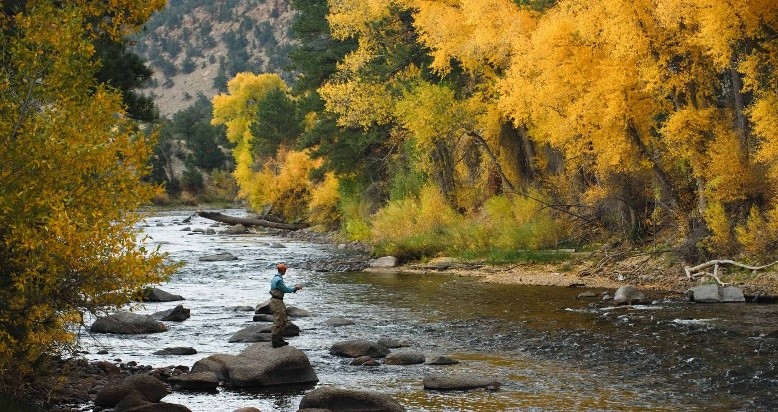
Amendment 83 appears simply to restate existing laws and processes. It would amend the Colorado constitution to make hunting and fishing a right for Colorado’s 874,000 fishing license holders and 378,000 hunting license holders. It would specify hunting and fishing as the preferred wildlife management option, ensure no trespass on private property or changes to property rights, and would not limit the authority of state agencies to license and regulate these activities. People in the state already have the right to hunt and fish, which is already the primary management tool; trespassing is already illegal; and the state already licenses and regulates hunting and fishing. But those systems are in statutes, so they are subject to changes by legislation or ballot initiatives – there have been 17 such attempts in recent years. Constitutionally, there are no guarantees, though 24 states have such language in their constitutions.
The relationship between sportsmen and conservation should be better understood, as it began with the effort to save the buffalo. In 1800 there were an estimated 25 million buffalo in North America. I have copies of the fascinating journals of Lewis and Clark, Zebulon Pike, and Stephen Long. All three expeditions crossed the Great Plains exploring, mapping, and documenting the new Louisiana Purchase at the beginning of the 19th century. All three described seemingly infinite herds of buffalo and elk. Pike and Long both said the prairie was black with so many buffalo they couldn’t be counted, herds that stretched further than the eye could see. By 1885 they were gone. The great herds were virtually exterminated in less than a decade – almost every single one. Similarly, by 1900 only 40,000 elk remained in North America.
Fortunately, a group of eastern aristocratic hunters decided to establish rules of fair chase and set standards for hunting conduct, to save these great herds. The Boone and Crockett Club created the sportsmen’s code of ethics, and advocated protection of national parks, forests, and wildlife refuges. They passed the first federal law protecting wildlife in 1900. In 1937, the Pittman-Robertson Act dedicated excise taxes on guns and ammunition to wildlife conservation and required license fees to go to state wildlife agencies.
Colorado re-introduced 50 elk in 1916, and today has the world’s largest elk population at 280,000. More recently, we’ve re-introduced endangered fish, lynx, river otter, moose, desert bighorns, black-footed ferrets, greater prairie chickens, and others. Colorado’s 19 hatcheries produce 90 million fish annually for sport-fishing and native-species recovery. The Colorado Wildlife Habitat Program has conserved over 300,000 acres and nearly 400 miles of streams. Restoring wetlands, managing invasive species, promoting photography, maintaining campgrounds and picnic areas – that barely scratches the surface of wildlife conservation activities, almost entirely funded by hunting and fishing revenue.
The CSI report found that hunting and fishing generate $2.5 billion dollars in director sales annually, and employ 14,300 people in outfitting, guiding, game processing, retail, food and beverage, accommodations, and entertainment. Colorado wildlife management – $220 million – is funded almost entirely by federal and state revenue from license sales and fees on hunting and fishing equipment – not tax dollars.
But beyond jobs and economics, our interactions with wildlife are part of our culture, history, and way of life. People who oppose hunting and fishing claim a moral high ground because they love wildlife, as if everyone else doesn’t. But the moral high ground is not theirs. We all love wildlife, and if they remove our most important conservation tool, the diversity of wildlife they enjoy, and the resources that maintain it, will be gone.
“Let nature take over” sounds appealing. But in a state with 6 million people, the ancient natural order has been irreversibly altered with homes, businesses, cities, farms, roads, and other infrastructure essential to our prosperity. It falls on us to conserve and manage forests, plains, rivers, and wildlife to best ensure their future. Hunting and fishing are among our most time-honored and successful means of doing that.


{ 0 comments… add one now }
{ 1 trackback }