Earlier this year U.S. Forest Service (USFS) Chief Tom Schultz announced a major reorganization of the agency, prompting the usual opposition from employees predictably opposing any change in the status quo. A few environmental industry groups expressed skepticism, but the story was mostly ignored elsewhere. That might be because many people assume it will face the same future as the first Trump Administration’s attempt to move the Bureau of Land Management from Washington to Grand Junction. The Biden Administration simply cancelled that plan and moved the office back to D.C., but this new USFS plan is much more far-reaching in scope and impact.
This plan also involves moving a national headquarters out of Washington, in this case to Salt Lake City. But it’s much more than that. This reorganization has been in the works a decade, under both Trump and Biden, and based on planning discussions since at least 2008. It will consolidate 70 research stations into a single organization in Ft. Collins, and abolish all nine regional offices, replacing them with 15 state-level offices, all designed to move decision-making closer to the affected communities. Hiring is already underway for those state director positions, as well as positions in the new Salt Lake headquarters, where Schultz himself will live and work.
USFS, part of the Agriculture Department, has a $9 billion budget, 30,000 employees, 600 ranger districts, and 193 million acres, including 154 national forests, 209 national grasslands, 80 experimental forests, and six national monuments. It is a very decentralized agency, but at least a few headquarters employees may have to move. They are not happy.
One recent retiree called the plan “chaotic,” saying it “is turning over 100 years of organization.” Another group wrote to Congress saying over 1,900 people could be affected, though the actual number is unclear. The Western Governors Association supports the plan, saying decisions made closer to the state level will be more sensitive to the impacts on communities and economies.
Are the details in this particular reorganization plan the perfect approach? Do they go far enough? I’m not completely sure; time will tell. But despite all the hand wringing and teeth gnashing, the controversy largely ignores the central point. That is, no bureau ever needed reorganization more than the USFS, which has become one of the most notoriously dysfunctional agencies in government.
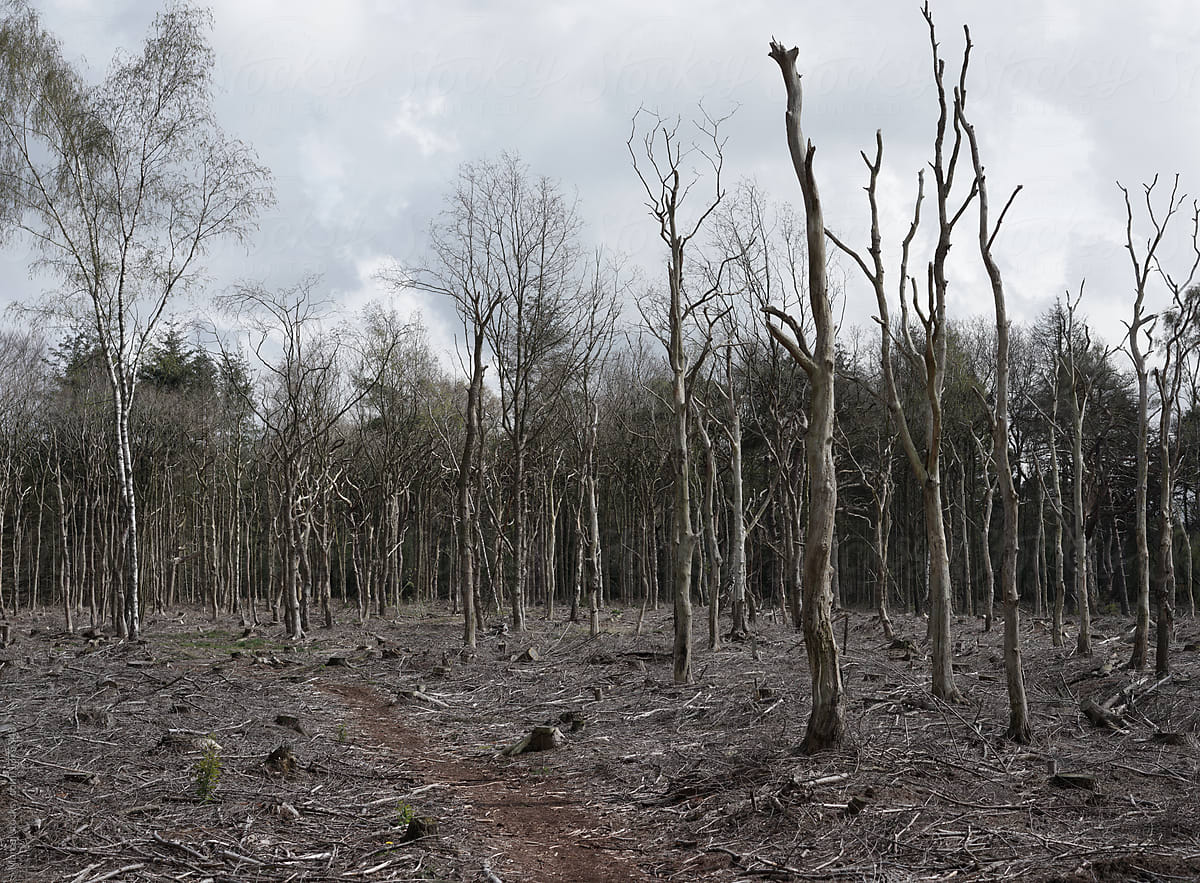
The current structure was designed by the first Forest Service Chief, Gifford Pinchot, 120 years ago, when the primary goals and challenges were very different. 50 years of additional regulations and processes have led to what another Chief decades later called “analysis paralysis,” the inability of forest managers to manage. Today, decisions are rarely driven by forest health, but by lawsuits and appeals of virtually every action, interminable public processes and hearings, limited budgets and staffing, and the shortage of professional foresters.
It is ironic that one of the concerns expressed by Schultz’s critics is that older employees may take early retirement, leading to what some call a “brain drain,” the loss of experienced staffers. But that already happened – decades ago. The people leaving now are employees who replaced the professional foresters 20-30 years ago. And for the most part, they are not foresters. According to government data, the USFS’s professional forestry workforce shrunk from 5,500 foresters in 1989 to 3,305 in 1998 and just 1,401 by 2024 – a 75 percent decline. The agency hired biologists, hydrologists, climate scientists, and other disciplines for decades and now has a dire shortage of managers who understand forest science. Foresters now comprise barely 4 percent of the workforce.
The numbers speak volumes, providing powerful independent evidence that the nation’s professional forestry workforce has contracted substantially over the past half-century.
It is a difficult problem, because that shrinking forestry workforce is compounded by a long-term decline in the pipeline of new professionals. Enrollment in North American forestry schools peaked during the 1970s and has trended downward for decades, as other trades became more fashionable. By 1981, undergraduate enrollment had fallen 20 percent from its 1975 peak, followed by another sustained decline in the mid-1990s. That trend substantially reduces the government’s capacity to recruit trained forestry professionals to plan and oversee timber harvests, reforestation, fuels reduction, and other active forest management.
The resulting management structure has been a death sentence to the national forests, overseen by a generation that has squandered the conservation movement’s greatest legacy. Over 200 million acres have burned since the need to reorganize the Forest Service was first discussed. It is long overdue.


Comments on this entry are closed.