German philosopher Arthur Schopenhauer wrote that “Truth passes through three stages. First, it is ridiculed. Second, it is violently opposed. Third, it is accepted as self-evident.”
Twenty-eight years ago, in the summer of 1998, the Club 20 Research Foundation published a report called “Decline of the Aspen: A Special Report on the Health of National Forests in Colorado.” It attracted substantial media coverage, widespread opposition to its recommendations, and even ridicule from some environmental industry groups that considered themselves superior experts on forest management.
The Report suggested a growing crisis in Western Colorado’s aspen forests. Then-State Forester James Hubbard was quoted saying, “If the U.S. Forest Service policy remains on its current course, the State of Colorado will lose most of its famed aspen trees within 40 to 50 years.” One of the report’s conclusions said, “continuing the status quo in the West means large portions of Colorado’s colorful aspen will continue to decline, resulting in an unhealthy forest ecosystem,” which will be further exacerbated by “the unhealthy presence of disease and insects throughout the forests.” The prediction has aged remarkably well, though many dismissed it as unlikely at the time.
The report relied heavily on the work of forest experts, including Hubbard, who later served as Deputy Chief of the Forest Service for State and Private Forestry, and eventually as the Undersecretary of Agriculture for Natural Resources (the office that oversees the Forest Service). It was also influenced by an analysis from the Forest Service’s Rocky Mountain Research Station published in the journal Rangelands and titled “Decline of Quaking Aspen in the Interior West: Examples from Utah,” explaining the science behind the demise of vast stands of aspen trees. The decline was a direct result of the suppression of fire’s natural role over the decades, which resulted in conifers replacing aspens over time.
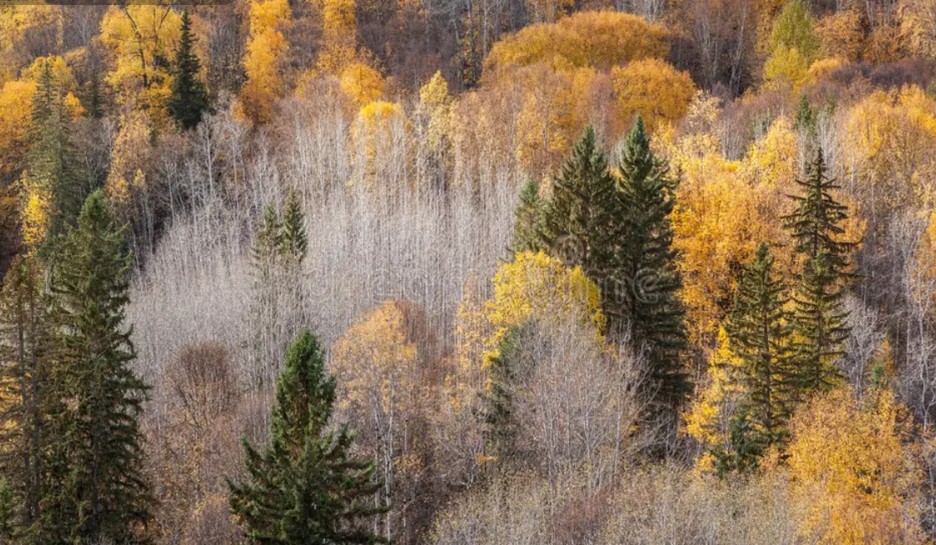
A report much later (2013) from the Colorado Forest Restoration Institute and Colorado State University tracked the progression. “Following the drought of 1998-2002, large-scale dieback of aspen forests began occurring throughout Colorado. Termed Sudden Aspen Decline (SAD), the phenomenon prompted the concern of forest managers, researchers, and the general public.”
While some Club 20 critics dismissed the 1998 report, one frequent but fair critic, Ed Quillen of the Salida Mountain Mail, praised the document as a “rather sensible” approach. He explained the process succinctly. “Aspen love sunshine and open, disturbed land – the sort of zone produced by a forest fire. Minimize the forest fires, and you reduce the places where young aspen groves can thrive. Meanwhile, the aspen provide shade for evergreen saplings, which will grow and eventually crowd out the aspen by taking away their sunshine… Fire-suppression does not preserve a mountain forest like some outdoor museum diorama. Instead, fire-suppression will, over time, produce a different forest – one heavy with fir and spruce, bereft of aspen.” Precisely what has happened in the decades since.
In addition to the aesthetic disappointment of losing miles of aspen trees and their famous fall colors, we now know the transition also has a devastating impact on water flows, one of the West’s most appalling predicaments.
Hydrologists, botanists, biologists, foresters, land managers, and others now agonize over how to restore stream flows in the Colorado, Rio Grande, and Snake River Basins, refill the Great Salt Lake and the major reservoirs. They increasingly recognize that allowing conifers to replace aspen was a major factor in reducing water supplies.
Historically, the Western U.S. had 20-25 million acres of aspen trees, once considered North America’s most common tree species. But in many parts of the Rocky Mountain West, nearly half of historic aspen stands have been replaced by conifers. Conifers (evergreens) use water 365 days a year, and up to 40 percent of the snow that falls on their branches evaporates before it gets to the ground, much less the rivers. Aspens, because they are deciduous, lose their leaves in winter, passing nearly all the moisture to the ground and the streams.
Millions of acre feet of water are at stake in forest management decisions. Club 20 knew that even in the 1990s, though many ignored its warnings.
In 1893, John Wesley Powell cautioned that the American West was too arid to support the vast settlements envisioned by eastern politicians and shady land promoters. He argued that western development would ultimately be constrained not by land but by water. He was ignored, even mocked. But the intervening decades have vindicated the accuracy of his predictions. Club 20 was ahead of its time, too.


And wildfire suppression allows the ladder fuel to build up on the forest floor, making wildfires, when they do happen become much worse than they normally would be. As a wildfire survivor (we lost our home in a 2013 Colorado wildfire), we learned the lessons of woodland mitigation all too well. Great article!
Excellent recap! Thanks for sharing.
It is, as you say, appalling, all the way around. The population growth here has slaughtered our culture, land, values, and the list goes on and circles back around like an accelerating spiral-scheme. I don’t have anything material to add to the analysis, but rather appreciation for your sharing your understandings and experiences. The history and a confidently sober assessment of it and all that’s happened in the years following important events of the past are terribly important, interesting, and convicting. Or, at least, should be! Brigette (P.S. Hello to D.)
Comments on this entry are closed.
{ 1 trackback }