In 1937 the French poet and philosopher Paul Valéry published Reflections on the World Today, in which he originated one of literature’s great lines: “The problem with our times is that the future is no longer what it was.” The line was perfected later by Yogi Berra, who said simply, “The future is not what is used to be.”
Neither Valéry nor Berra were thinking about climate change, but it is a pithy way of recognizing that what was once widely – almost universally – expected to happen is no longer considered probable. Not even by the same experts who once insisted the science was settled.
The United Nations’ Intergovernmental Panel on Climate Change (IPCC), is revising and editing its “Seventh IPCC Report,” due out next year, and we have already learned that it has “adjusted its modeling framework.” That means IPCC will no longer defend its primary scenarios, known as SSP5-8.5 and SSP1-1.9, published in 2017, and upon which most of the world’s climate change policies were based – they were cited more than 45,000 times in academic papers and government studies. Those scenarios predicted a 4-5 degree Celsius (7-9 degrees Fahrenheit) warming by the year 2100. That framework was used by hundreds of scientists around the world for their own analyses that forecast a dramatic rise in sea levels, global crop failures, rapid melting of polar ice caps and glaciers, and mass extinctions.
Now 45 IPCC scientists are citing more current data and writing in the Geoscientific Model Development journal that a broader set of models will alter the new IPCC report. “For the 21st century, this range will be smaller than assessed before,” they write, and the earlier forecasts – which have been touted as settled science – “have become implausible, based on trends in the costs of renewables, the emergence of climate policy, and recent emission trends.”
Translation: the range of temperature fluctuations will be much smaller than we said; renewable energy turns out to be less cost-effective than we claimed; and the globe is not warming as we predicted.
It is worth remembering what the IPCC, which shared the 2007 Nobel Peace Prize with Al Gore, has been saying for decades. The organization projected “dramatic” changes in both temperature and sea levels as a result of man-made greenhouse gas emissions, including a world-average temperature increase of up to 5 degrees, causing 3-5 foot rises in sea levels. Its 2007 report contained dire warnings that tens of millions of people would be flooded out of their homes each year, tropical diseases like malaria would spread, by 2080 hundreds of millions of people could face starvation, smog in the U.S. would worsen, ozone-related deaths would rise 4.5 percent, half of all plant species in Europe would be vulnerable to extinction, and polar bears and other animals would exist only in zoos.
One of that report’s authors said, “We truly are standing at the edge of mass extinction.” IPCC reports were the basis for government policies around the world, spending trillions on renewable energy subsidies, and blocking development of more affordable energy. And now, modelers working on the IPCC update say the chances of this worst-case scenario actually happening are “negligible”.
What new data might prompt such determined science writers to re-assess? Well, actual global temperature has increased 1.2 degrees (not 5) in 150 years. Sea level rose about 3.9 inches in 30 years (not feet). From 1900 to 2017, the number of countries in which malaria was endemic was reduced from 200 to 86, and deaths declined from 4-5 million to about 600,000, nearly all of them in Africa (suggesting some cause other than global warming). Global starvation went from 800 per 100,000 population in 1920 to about 3 today. Ozone-related deaths have declined throughout the western world (not increased 4.5 percent globally). And while polar bears made a dramatic comeback between 1950 and 1980 (from 5,000 to over 25,000) their population has remained stable ever since, around 30,000 today.
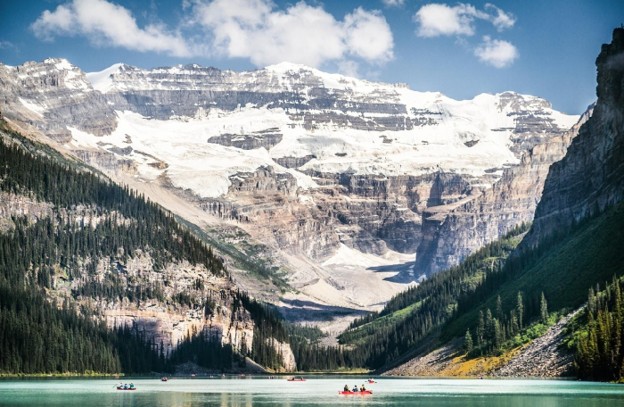
A funny thing happens when you predict some dire event in some arbitrary year. Climate scientists said Glacier National Park in Montana would melt by 2020. So, when 2020 came and went and the glaciers were still there, the Park’s doomsday signs had to be removed. Al Gore said the North Polar ice cap would be gone by 2013, but it’s still there. In 2018 King Charles III said we had only 8 years to save the planet – did we do it? Or is the future just not what it used to be?


Comments on this entry are closed.