America’s capture of Venezuelan dictator Nicolas Maduro has commentators arguing about what to do with the country’s oil. In many ways, it’s the wrong argument. Global political and market forces will ultimately determine whose cars and factories benefit. However, the future of the country and its industry will not be determined by the fate of its oil, but by what happens to the money.
Over 68 percent of Venezuela’s oil production has been going to China, about 23 percent to the U.S., and 4 percent each to Cuba and Spain. The Trump Administration has a different plan for the future of that oil, assuming the infrastructure can be rebuilt. The system was neglected, robbed, and ignored by a regime focused on drugs instead. President Trump wants major oil companies to go do what they do best, though several are reluctant to invest in the country that twice stole all the facilities they built. Eventually, though, some will make the investment because the resource is too big to ignore.
With over 300 billion barrels of proven reserves, Venezuela has more oil than any other country. If produced, the economic impact could be almost unimaginable. It represents not only an economic opportunity, but also means for addressing severe shortages of food, medicine and basic services, the inevitable result of corruption. That economic opportunity is where the debate ought to be.
It is a chance to create a new system, in which the people of Venezuela have a personal stake in a political process that preserves freedom, democracy, and private enterprise. That does not require American military action – it requires a different vision for the money. It is not the first time we have seen such opportunity.
Before the Iraq War, the U.S. tried to replace Sadam Hussein’s regime and set up an Iraqi national oil company, as was done in Iran in 1954. It was wrong approach then, and would be the wrong approach now. Legendary economist Milton Friedman explained the mistake in a 2004 interview with David Asman. “A terrible mistake… We should have… sold all of the oil resources, taken the capital and put it in a fund for the people of Iraq. Very much like we did with the oil fund that they have in Alaska.” Asman added, “So that every single law-abiding Iraqi would have a share of Iraqi oil.” Friedman: “The only thing that the government would do is to get the income from it to distribute to the Iraqi people. So that the Iraqi people would have a direct stake in peace and prosperity in their own country.”
Indeed, look at how that works in Alaska. Despite environmental and legal delays, the Trans Alaska Pipeline was built within a decade. That’s because politics were overcome by the personal interests of the people of Alaska. They adopted a constitutional amendment creating the Alaska Permanent Fund to manage oil royalties, putting at least 25 percent into a dedicated fund for future generations. It was an ingenious idea mostly because it put that financial resource out of the reach of political control.
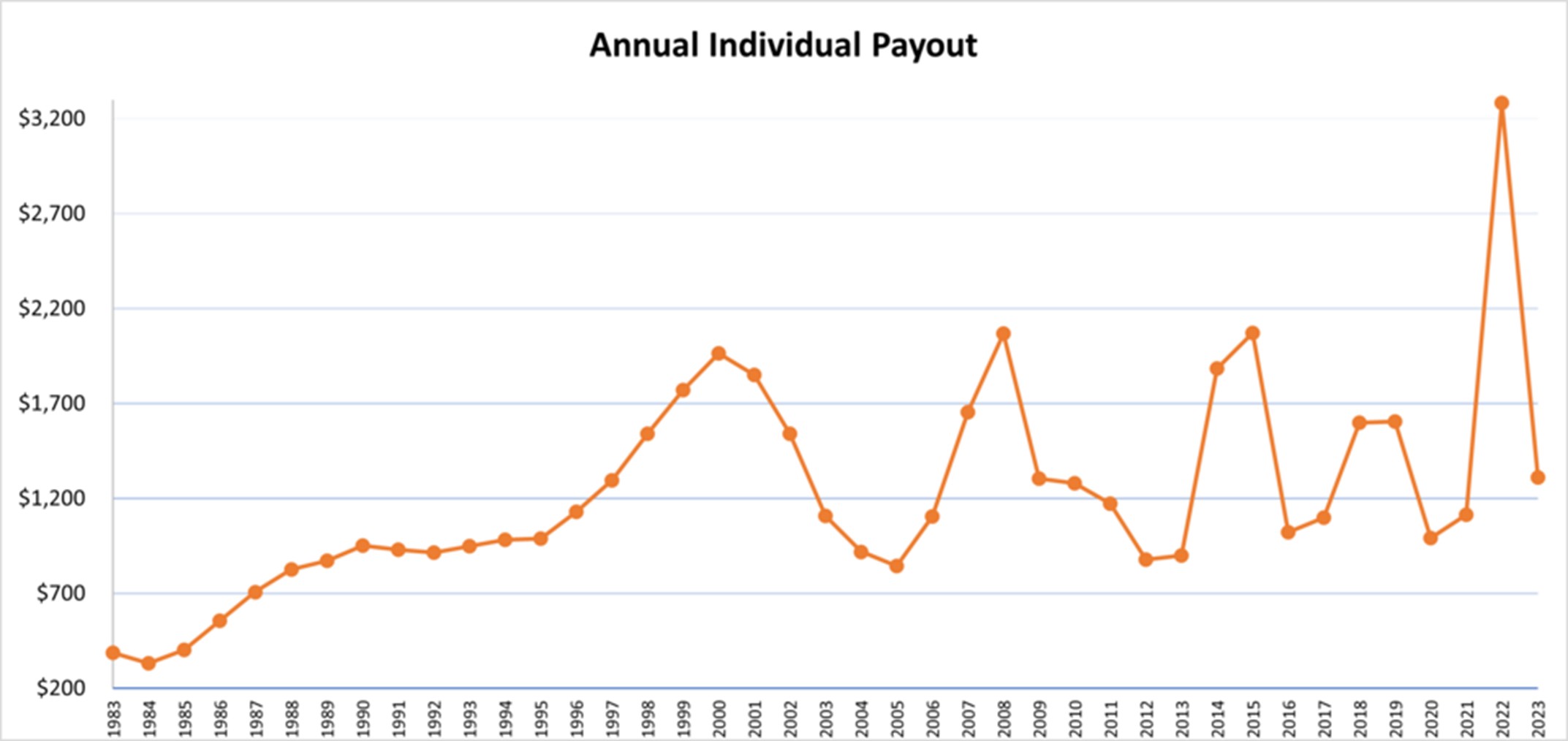
It is now the largest sovereign wealth fund in America with a market value of $70 billion, and it pays dividends to Alaskans based on the fund’s performance – $31.3 billion over the years. On average, Alaskans have received $1,230 a year since the fund began, nearly $5,000 for a family of four. So, they have a personal stake in energy industry success, because their annual dividends rise and fall with the industry’s ups and downs. In 2024 the amount was $1,702 for every man, woman, and child.
So, what happens when that system is threatened? In 1999, with oil prices at $9 a barrel and low prices forecast into the foreseeable future, the State asked voters to spend some of the fund to bolster its budget. Despite support from all the elected officials, and huge campaign spending, 84 percent of voters said “no.” They protect their oil revenues, and Alaskans will never vote for politicians who want to kill the industry.
Venezuelans would be just as firm in their support for a strong energy economy. The oil can go wherever leaders decide to sell it, but if the money goes to the people, a steady and permanent flow will be guaranteed. Today in Iraq, 99 per cent of government revenue comes from oil. But their system remains unstable because that vast wealth has never trickled down to ordinary citizens. Nothing would better stabilize a prosperous future for Venezuela.


Comments on this entry are closed.