Biannually during my years at Club 20, we took 50 Western Slope leaders to Washington to meet with key leaders on public lands and other issues important to our region. During one such trip, we had a spirited conversation with a congressional staffer from Rhode Island, whose boss was pushing legislation to designate wilderness areas in Colorado.
We failed to convince him that Rhode Island congressmen should leave Colorado land management decisions to Coloradans. He pointed out that these lands belong to all the people. We explained that most of the people who live there opposed it. He correctly said the people there are a minority. We said people who lived there knew more about it, which only offended him. He said it wasn’t his job to care what people in Colorado thought. As a last resort, we explained the importance of business activities in the area, upon which communities were dependent and which the proposed wilderness legislation would effectively ban. He countered with a glowing description of the last great places, so we asked the question Westerners often do: “Have you ever been there?” He had not, but I will never forget his response. “We don’t have to visit the place to care about it. For many of us, it’s enough just to know it’s there.”
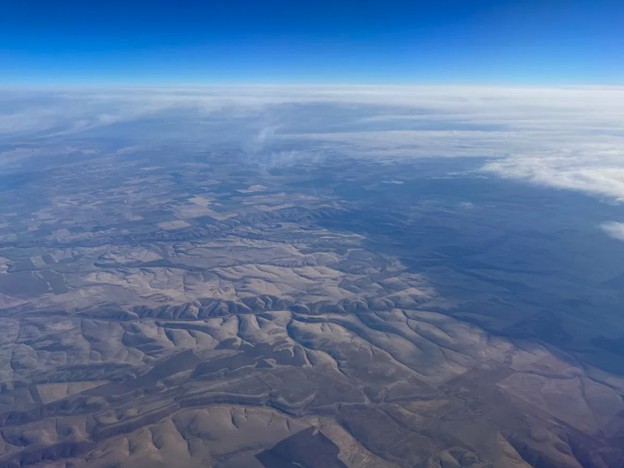
For millions of people who live in the American West, it is not enough just to know these great places are there. Life requires that we use the water and other assets of these lands, because throughout most of the West, the federal government owns the resources upon which life chiefly depends. Yet that staffer’s smug view is more common than most people imagine. And it will be the reality for almost everyone if a famous environmental writer gets his way.
George Wuerthner proposes what he calls a “Civilization Area System,” as opposed to the national “wilderness system.” In fact, he would turn the whole idea of wilderness areas upside down. Instead of drawing lines around places where people should be kept out, he would draw a line around the places people should be kept in.
Wuerthner is not an outlier; he is well-known, speaks at conferences, and serves on numerous boards. He has written over three dozen books, including “Welfare Ranching: The Subsidized Destruction of the American West,” “Energy: Overdevelopment and the Delusion of Endless Growth,” and “Keeping the Wild, Against the Domestication of the Earth.” He has personally visited 200 national park sites and twice that many wilderness areas, though if he were to prevail, millions of other Americans would never get that chance.
He likes the language of the original Wilderness Act of 1964, designed to set aside some lands for different treatment than other federal lands. Wilderness areas are kept in their “natural” pristine condition, not available for leasing for any purpose (grazing, logging, mining, energy, off-road recreation), or any public access except on foot or horseback. The law defines these unique places almost poetically as “……an area where the earth and its community of life are untrammeled by man, where man himself is a visitor who does not remain.”
Wuerthner proposes, “Instead of surveying boundaries around wild places and calling them wildernesses, we should instead begin to limit the area influenced and impacted by human activities. These regions would be known as Civilization Areas. Areas outside of Civilization Areas would be wild by default.” Those would be areas “where the earth and its community of life are trammeled by man, where man himself is a resident who remains.”
Congress has designated over 800 wilderness areas since 1964, encompassing over 110 million acres. And that’s just the beginning. There are also 161 national parks, monuments and seashores, 560 national wildlife refuges, 154 national forests, and many other restricted areas. The whole history of conservation legislation is identifying and mapping special areas to be protected against various human uses. But “Civilization Areas” would do the opposite, identifying and mapping the places where people should live and keeping them out of all the rest.
So, no cabin in the woods for you. One of Wuerthner’s supporters further explained, “This would be a good start, but we also need to un-civilize a lot of land and restore it to its native condition as much as possible.” In other words, people should stay in the cities and have no need to visit places that are to be left wild. It should be enough for everyone just to know it’s there.


Comments on this entry are closed.