Referring to the President’s annual budget proposal to Congress, a Bloomberg headline read: “Trump Plans to Offload National Park Sites, But States Don’t Want Them.” Really? I couldn’t help wondering why we have national parks that states don’t want. Without state support, how did they get established in the first place?
Funny how many federal officials think only federal officials can protect important places. As if nobody else could possibly manage a park, monument, recreation area, trail, or even a historic home.
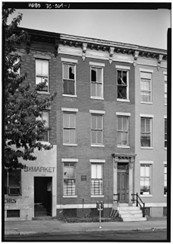
Carter Woodson (1875–1950) was an important historian and writer, founder of the Association for the Study of African American Life and History. His home in Washington, D.C., was purchased by the National Park Service in 2005 as a National Historic Site, and restoration began. Twelve years later in 2017, the home was opened for a day to celebrate “phase 1” of the renovation, and for three days during National Park Week. About 200 people visited before the home was again closed for the ongoing renovation, which the Park Service said it expected to complete for reopening in the fall of 2023. It is still unfinished and closed to the public, 20 years after the government purchased it, and the Park Service now says it will open sometime in 2026.
Bags of money have been spent, but has federal ownership proven to be the best way to preserve and share this historic site? If federal ownership is the only sensible approach, how would one explain the successful preservation and educational programs at sites like Mt. Vernon, Monticello, Montpelier, the Hermitage, the Woodrow Wilson House, and the Reagan Ranch, all operated by private foundations? FDR’s Little White House in Warm Springs, Georgia is operated by the state, as are the homes of seven other presidents. One is operated by a city, two by universities, one by the DAR, and eleven by private foundations. Hundreds of important historic sites are privately operated, such as the homes of Henry Ford and John D. Rockefeller, and there are nearly six times more state parks (2,474) than national parks (433).
The 433 “units of the national park system” include 63 traditional “national parks.” But they also include 87 national monuments created by executive orders, 25 historic battlefields, 63 National Historical Parks, 76 National Historic Sites, 3 lakeshores and 10 seashores, 31 memorials, 4 parkways, 18 recreation areas, 14 river segments, 6 trails, 19 “preserves,” and 2 “reserves.”
Some are national treasures that attract millions, such as Grand Canyon and Yellowstone, which last year had 4.9 and 4.7 million visitors, respectively. Altogether, the national park system had over 330 million visitors last year, a new record. But fewer than 200 of them visited Alaska’s Aniakchak National Monument, created by a Jimmy Carter Executive Order. It’s an impressive volcano, but so remote there is no danger that anything would change if the federal government gave it to Alaska.
The Bloomberg article explains that the White House wants to trim the National Park Service budget (the proposal is to reduce its $3.3 billion budget by about 29 percent) by transferring some sites to state, local, or tribal management. “States don’t want them” it claims, saying that “their resources are already tight.” Except no state actually said that to the reporter. She quoted two environmental group leaders, an environmental lawyer, and a park official lobbying for more money. The one state officially responding, Maryland, said the State would certainly step up to keep such places open. No evidence was cited for the conclusion that “states don’t want them.”
Almost every article on this subject includes a majestic picture of Yosemite, Everglades, or Grand Canyon, none of which are on the table, of course. The writer asserts, “It’s not clear who wants the national park system to be trimmed, other than the White House and some conservative groups…” Well, possibly the people who voted for this Administration? Perhaps anyone who is concerned about a government $36 trillion in debt, or people who wonder why presidents have been so determined to force new national monuments down the throats of communities, counties, and states who didn’t ask for them, and in many cases strongly objected.
Like all presidential budget proposals, this one is dead on arrival in Congress. No reader needs to be told by me that there is no chance – zero – that Congress will ever transfer any major national park, to a state or anyone else. But it’s worth a conversation about lesser-known places like the Carter Woodson House. Or the Roosevelt National Historic Sites in New York. 123,000 people visited FDR’s home last year, 100,000 of whom did not visit Eleanor Roosevelt’s home less than 2 miles away. The latter is important history in Hyde Park, but is it so important to the nation that taxpayers in Delta, Colorado have to finance it?


Comments on this entry are closed.