Gertrude Stein wrote her oft-repeated line “A rose is a rose is a rose…” in a 1913 poem. She explained it as meaning “things are what they are.” But what if it’s called something else? That was Juliet’s question to Romeo: “What’s in a name? That which we call a rose, by any other name would smell as sweet.” Shakespeare argued that whatever we call something, it is still what it is.
Would that such common sense had been applied during 30 years of political arguments over which national forest lands were “roadless.” And what exactly should be considered a road.
Anyone who thought that issue long since resolved got a wakeup call with this year’s catastrophic California wildfires that killed 24 people, destroyed 1,400 homes, and refocused national attention on the scandalous mismanagement of forest lands. Last month Agriculture Secretary Brooke Rollins, who oversees the U.S. Forest Service, officially repealed the Clinton-era “Roadless Rule,” purposely reopening a can of worms. As she correctly explained, the disastrous condition of the nation’s forests cannot be fully addressed any other way.
There are so many regulatory roadblocks to forest management that a former Forest Service Chief famously called the process “analysis paralysis.” Rollins knows, as do most Forest Service officials, that the primary impediment to responsible management has been the “Roadless Rule.” It has been a monkey wrench for decades.
The controversy started with passage of the 1964 Wilderness Act, whose provisions are so restrictive that wilderness areas can only be designated by an Act of Congress. Congress outlined two factors for designating wilderness: support of the state and local communities involved, and a Forest Service recommendation finding the area “roadless,” with no previous development.
Because it is tough for Congress to ignore existing roads and land uses, the environmental industry began developing tools for creating de-facto wilderness areas without Congress. That was the basis of the “Roadless Rule.” Throughout the 1970s and 1980s the Forest Service struggled with a Congressional mandate to determine which of its lands were “roadless.” They produced two reports, called the “Roadless Area Review and Evaluation” (RARE and RARE II), which led Congress to add numerous new wilderness areas.
A decade later, the environmental lobby wanted more, demanding yet another inventory. President Clinton issued the “Roadless Rule” in the last days of his term, forcing a re-review of 43 million acres of national forests already determined unsuitable for wilderness designation, and prohibiting most uses on any lands found to be roadless. A federal court vacated the rule, then President Bush withdrew it. Bush then issued a new version, which a judge threw out, then the states were asked to make their own recommendations, resulting in another round of lawsuits and injunctions, ultimately reinstating the Clinton-era rule. That effectively ended most active forest management in the West and resulted, indirectly at least, in the death and destruction of millions of acres of once beautiful forests.
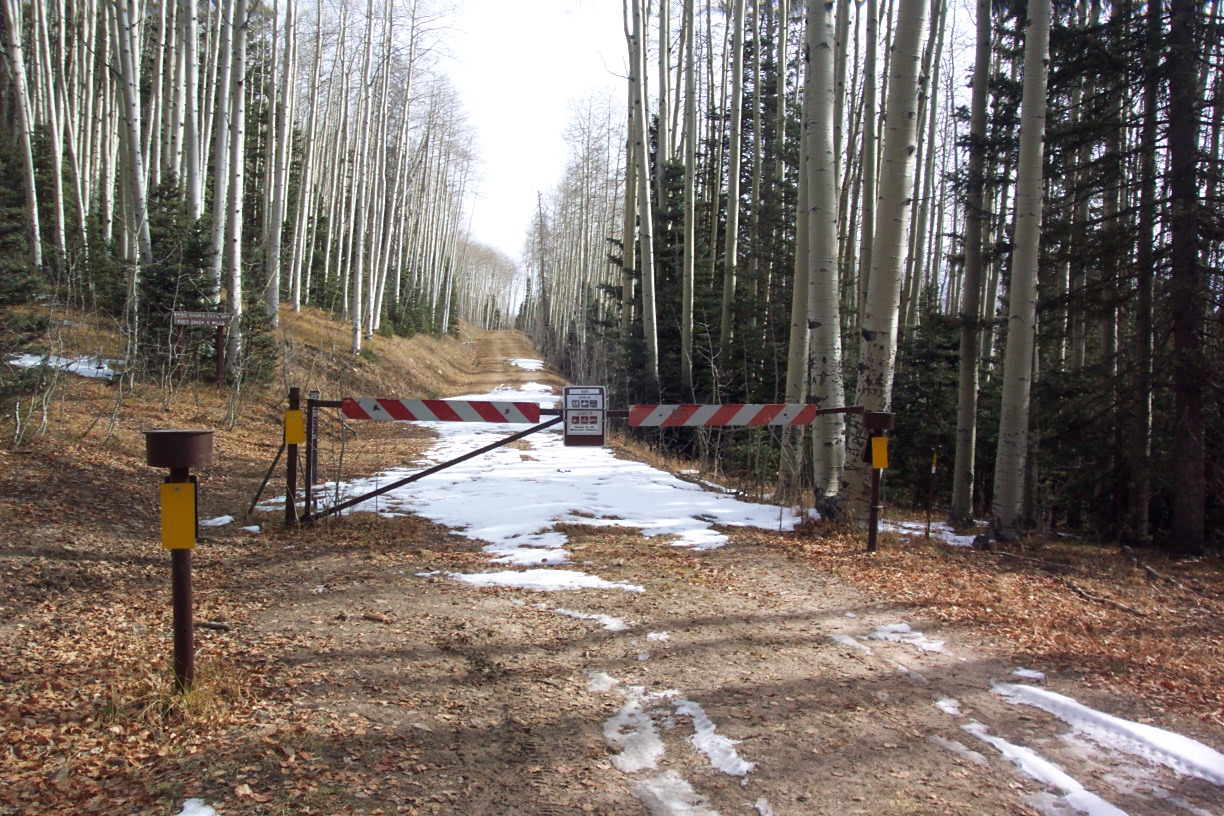
Throughout, silly arguments raged across the West about what areas were actually “roadless.” Often, the government simply denied the existence of roads people had used for generations. In many other cases, they published maps that just carved out the roads (they called it cherry-stemming), declaring the land on both sides to be wilderness. They frequently closed existing roads and then made them impassable by digging a trench, placing some boulders, and knocking down a few trees. “There,” they said, “that area is now roadless.”
Twenty-five years and 200 million acres of devastating wildfires later, a simple truth is now obvious to observers on both sides – you cannot manage a forest if you can’t get to it. Fire trucks can’t access vast areas of dry forests when they catch fire, and forest managers can’t thin and restore heathy forests without any access. The “Roadless Rule” restricts management on a third of all national forest lands, at least 28 million acres of which are classified as a high risk for wildfire.
If this massive impediment to active management is not removed, the entire West remains at risk of the same kind of fires that so devastated southern California earlier this year. Rescinding the “Roadless Rule” will finally allow forests to be managed according to the law, as enacted by Congress, not last-minute executive orders or injunctions from activist judges (Not that there won’t still be lawsuits, injunctions, and appeals – but Secretary Rollins will prevail).
Best of all, taking away the bureaucrats’ ability to invent new wilderness areas without an Act of Congress could finally end the silly 30-year argument over whether a road, by any other name, is still a road.


Comments on this entry are closed.
{ 1 trackback }